Alcohol, an ambivalent poison
Alcohol is a poison, it would seem. But it hides another secret, one the Ancients kept well... A post that won’t please everyone... Just as well, it isn’t meant to.

To Auguste, who moved my thinking forward on the subject
To my mother, who made me grasp the value of alcohol maceration
And to my grandfathers, who were fond of the bottle…
“Quitting drinking is extremely easy. I’ve done it dozens of times myself!”
Alcohol, the social toxin
Ah, alcohol…
Obligatory guest at every reception, permanent member of the Academy of Soirées, historic companion of any French dish, when it wasn’t part of the recipe itself…
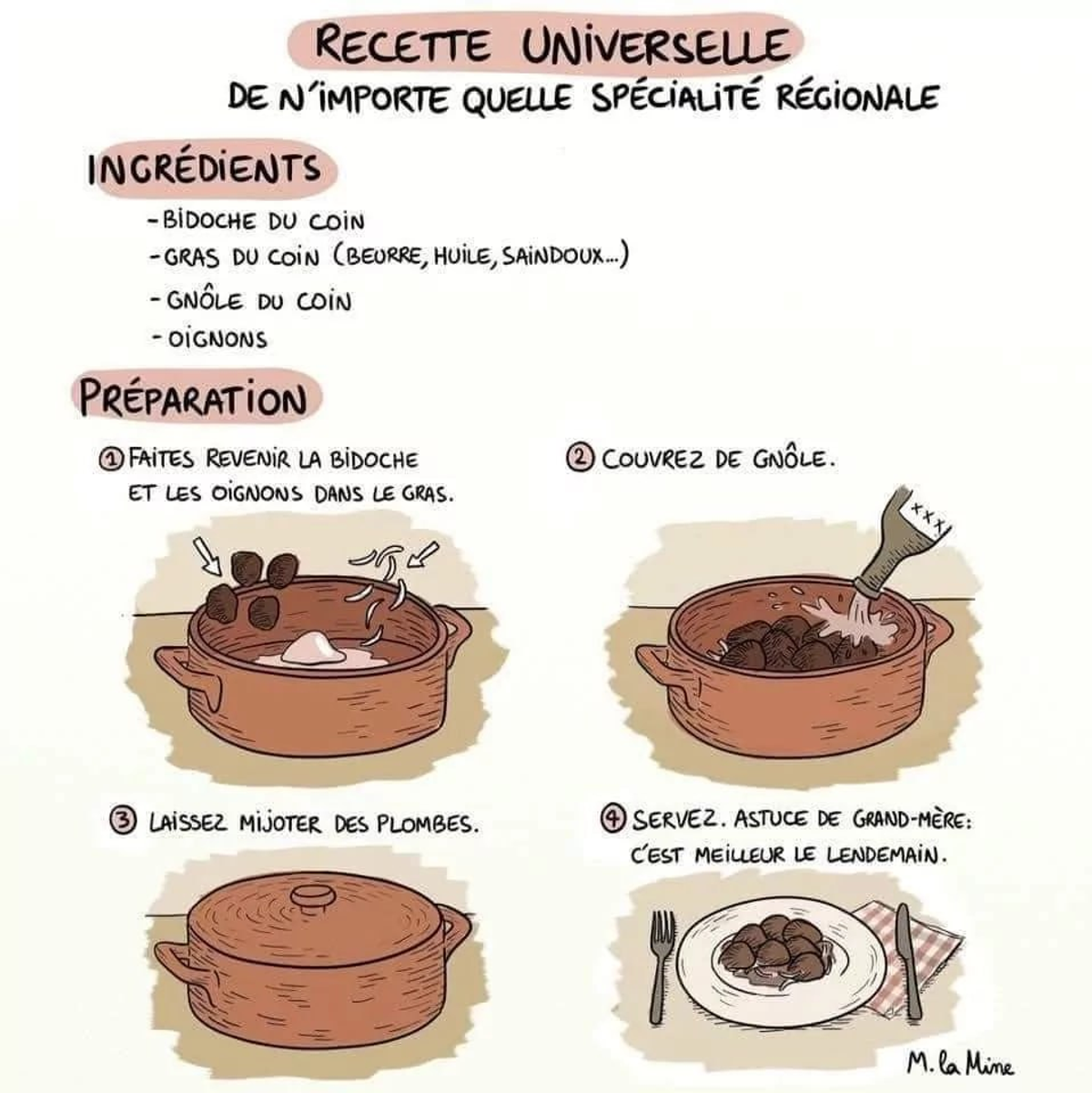
Living without alcohol, it must be said, is not easy nowadays.
And yet it would seem that ethanol is a tiny little bit… toxic.
Oh, just a smidge, rest assured…
The molecule only affects the liver, the brain, the stomach, the heart, the pancreas, cognitive abilities, the nervous system, reflexes, memory, judgement, coordination… Nothing to report, all things considered.
Yet, a 2010 study presented alcohol as “the worst of drugs”, with a more harmful effect than heroin or crack! [1]
To be precise, heroin’s “harm to the user score” is higher than alcohol’s. Roughly speaking, heroin does more damage to the body of the person who uses it… But alcohol makes up for it in its social consequences, in the “harm to others” category.
So it takes the prize for “most harmful drug” (assuming one imagines it might be addictive, which remains obviously to be proven…).
“But Androlf, if you’re trying to prove that drinking alcohol can be excessive and therefore bad, you’re stating the obvious!”
Granted. What interests me here is understanding why, if alcohol is bad, it is also ubiquitous. All of humanity can’t be that wrong about everything, especially on such a scale!
An ancestral paradox
Why on earth did the Ancients drink, and so much?
Oh, I know full well that not everything ancient is good for all that…
But still, if a cultural practice is hallowed by the years, across the centuries of the greatest civilisations, the question arises.
Personally, I see at least 2 reasons. The first is well known, the second comes from my investigation…
In defence not of alcohol, but of wine
First, there isn’t one alcohol, but many alcohols.
And some seem to be far less bad than others.
Take this example: wine.
Made from a noble fruit that ripens in the sun, it surely must have a few good properties!
Indeed, its tannins have interesting antioxidant properties, not to mention resveratrol, “the longevity molecule”.
(Even if the resveratrol concentrations in wine are not all that high [2], it’s worth having.)
Some even suppose that regular wine consumption would protect the French from coronary disease. At least that is the hypothesis known as the “French Paradox” [3] (or “how do the French eat so much fat without all dying of heart attacks”?)
Wine, granted, but what about the others?
Without being exhaustive about other alcohols, good things can be found in cider (malic acid), whisky and cognac (thanks to ageing in oak casks and their ellagic acid)…
But I won’t dwell (for now) on this question.
Let us grant that there may be good things, despite everything, in various alcohols.
There is one more fact in favour of the alcohols of our forebears.
Have our alcohols gone astray?
In defence of the Ancients, the alcohols drunk today differ enormously, in quantity as well as in quality, from the alcohols of the ancients.
Beer? It was mostly gruit. Hops only became standard in beer at the end of the Middle Ages.
Wine? To begin with, far less alcoholic. Often cut with water, and among the Greeks of the island of Cros, with seawater, even… And then, in the Middle Ages, laced with a staggering quantity of spices.
(I can already hear the critics telling me that the spices were necessary because the wine was bad. For one thing, I wasn’t there, and for another, what makes you think that spices are a matter… of taste?)
Cider? Unpasteurised, of course…
And I’ll skip over the various sterilisation processes added, the double fermentation of champagne, the sulphites added, when it isn’t sugar…
In short, our forebears did not drink from the same source as we do, even when it comes to alcohol. They did not drink that wine.
But there is something more intriguing still than the good things contained in alcohol, or the differences in the composition and production of alcohols, even if these already explain why our forebears chose to drink them…
Alcohol, a healing poison?
“If the Ancients drank alcohol, it must have given them something more than taste…”
I no longer remember when I first formulated this intuition. Was it over a picon, a pastis or a liqueur…
In any case, I can tell you that it became my thesis at the end of a winding, many-layered piece of research… Via the parasitic lead.
First observation: it is true that many historical alcohols are, directly or not, antiparasitics.
The conclusion of a search through alcohols made from plants, spices, roots, barks, flowers…
And every time, the same answer: yes, all these historical alcohols are more or less powerful antiparasitics (you can check for yourself here).
All of them, except a couple of more contemporary alcohols, which preferred sugar to the bitterness of the products of yesteryear.
Second observation: some alcohols have a specifically therapeutic purpose.
Chartreuse liqueur, Bénédictine, three thieves vinegar…
In these cases, therapy came before matters of taste (often it was even rather bitter…).
In other words, people drank these alcohols not to end up in the gutter, but to enjoy rude health.
(I know, it’s surprising…)
Third observation: alcohols we believe to be “simply popular” were in reality secret remedies…
Picon, invented by the Marseillais of the same name, was designed as an antidote to malaria!
Hence a prodigious hypothesis, which has on its side the obviousness of a riddle’s answer…
What if… all historical alcohols were first and foremost remedies?
Even if, like picon, they had to be sweetened with sugar to please the palate? The famous “spoonful of sugar” of Mary Poppins, which dilutes the bitterness to help the medicine go down…
And, indeed, see for yourself:
Absinthe: a maceration of Artemisia Absinthium (before distillation, of course). Wormwood was nicknamed the queen of bitter herbs. And indeed I know of nothing more bitter… Hence its therapeutic strength.
Génépi: Artemisia once more.
Pastis: likewise, it uses star anise, liquorice, fennel… Eminently antiparasitic plants, and more specifically antifungal.
Lemon, verbena and gentian liqueurs, not to mention the countless French or Italian bitters and other vermouths… Same story.
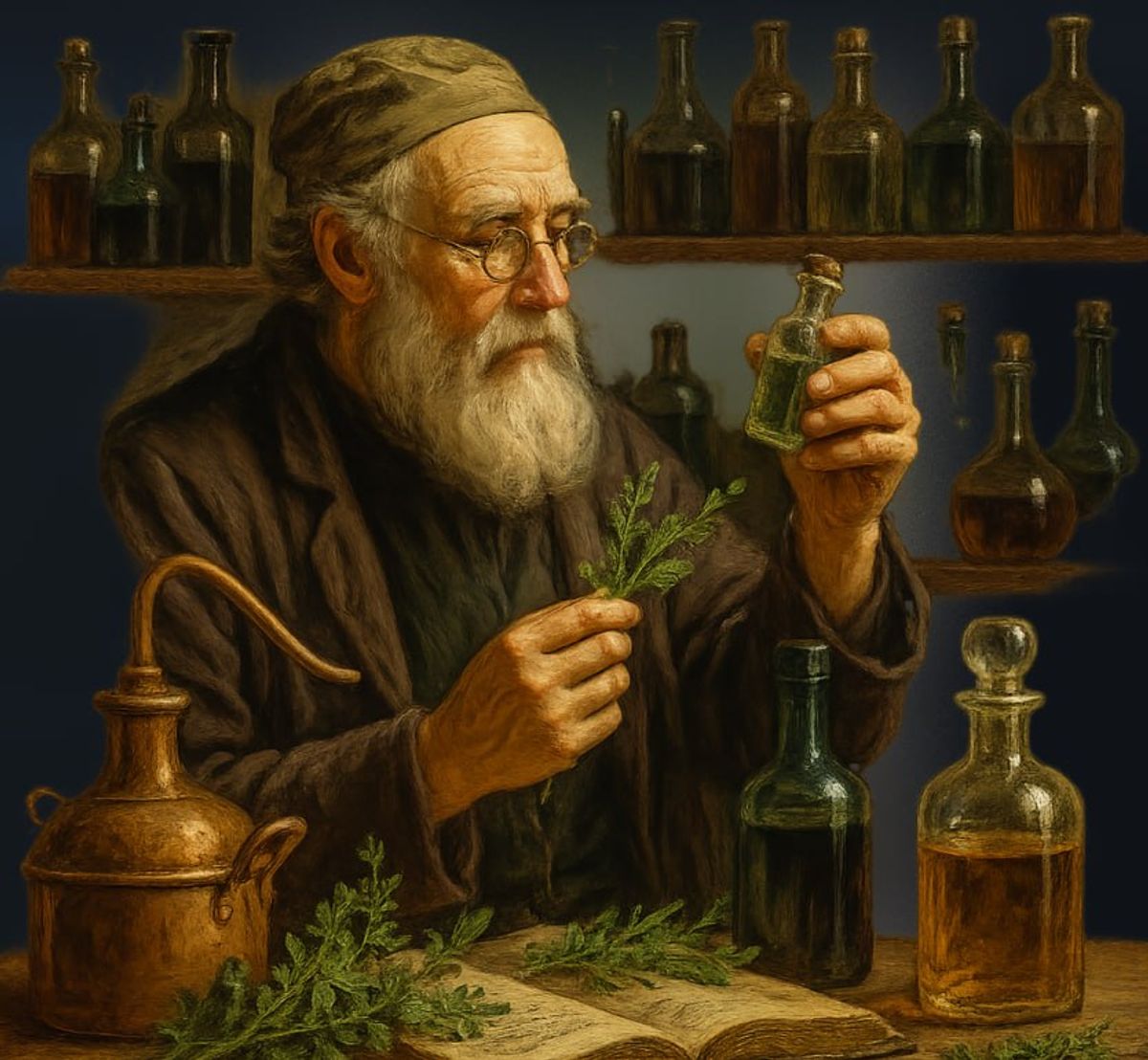
Yet alcohol remains a poison, doesn’t it?
The probable explanation
As with spices, the “historical” alcohols mentioned above are first a matter of health, then of taste, then finally of social merrymaking.
And if alcohol is a real poison, it is also one of the most powerful extractors.
Put a fruit, a plant, a leaf in alcohol, and its active principles will be absorbed!
It is therefore probable that the Ancients knew the bad side of alcohol… But that they used it to extract the therapeutic molecules firmly attached to these plants.
Drinking alcohol on its own? Probably a bad idea.
Drinking a maceration of plants, even a distilled one, and despite the alcohol? Enough to put you back on your feet!
Besides, it is probably the same principle as tea: boiling water, being biologically “not very active” but very active chemically, efficiently extracts the active principles. Tea, too, is an ancient therapy that became a habit of civilisation.
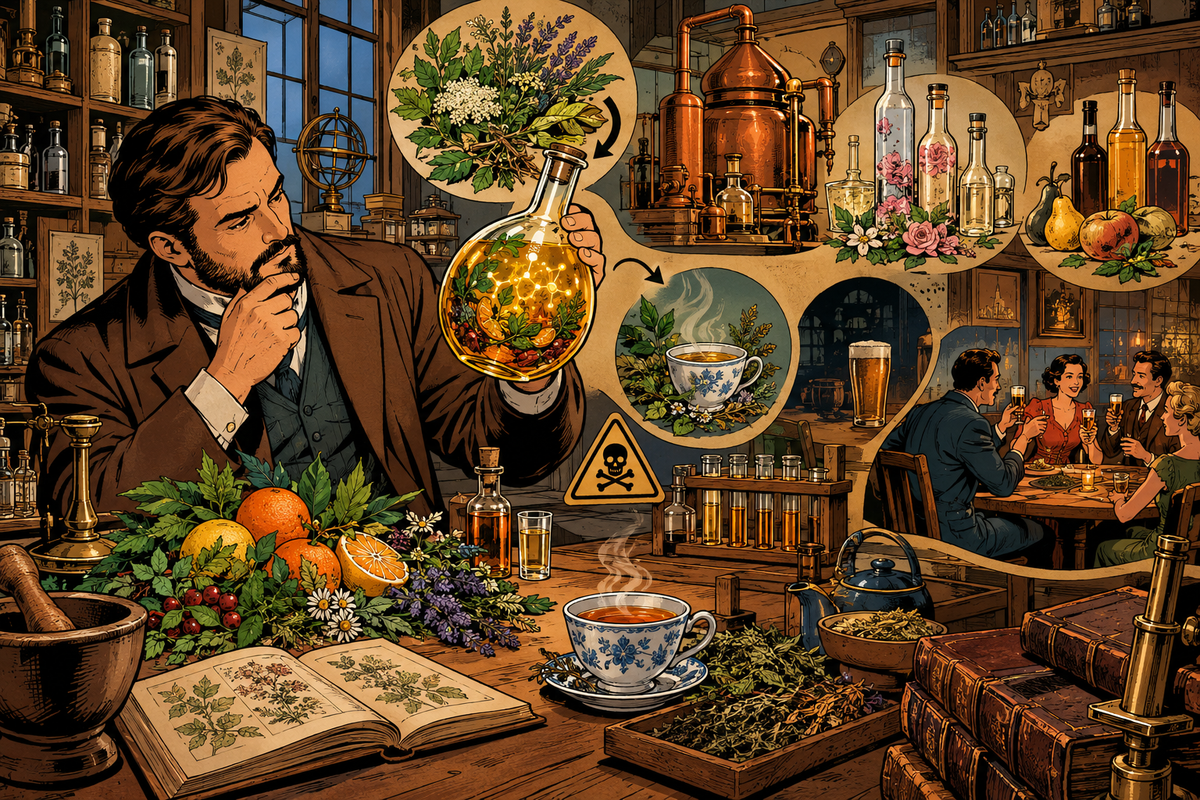
This story of historical alcohols is all very nice, but it leaves in the shadows certain other alcohols not mentioned here: fruit distillates, and the most consumed alcohol in the world.
As for fruit brandies, they appeared, logically according to our hypothesis, after floral waters and essential oils, guarantors of life[4].
But as for beer, it will earn us one last twist in the story of alcohol and humanity…
What is the therapeutic value of beer?
First of all, a distinction.
I will only talk here about present-day beer, and not the beer that was fermented through the centuries (yes, really, the nuance is a big one).
If this subject interests you, read the book by Patrick E. McGovern on ancestral beers [5].
Now, let us consider the value of beer.
It contains flavonoids, including 8-prenylnaringenin, the most powerful phyto-oestrogen in the plant kingdom… [6]
Phyto-oestrogens, among others, contribute to the “overexpression of aromatase” [7], which converts androgens into oestrogens. So, in the end, less testosterone for beer drinkers…
Strange for a drink considered masculine…
But I think there is worse.
Should we abstain from beer?!
Because there are at least two other problems with the popular brew.
The first is exposure to mycotoxins.
Beer is made from barley, barley is a cereal, and cereals are the favourite prey of fungi.
So they cheerfully pour their toxins onto our harvests. The famous “mycotoxins”.
And indeed, when someone had the bright idea of studying 14 of the mycotoxins of Fusarium (a fungus that is a dab hand at unpunished “mycotoxication”), they found rather troublesome levels of DON and HT-2, two particularly harmful mycotoxins[8].
“Troublesome”, because taking the (commercial) beer that is the most “mycotoxicated”, you reach the harmful level of DON with three pints, and the harmful level of HT-2 with… 20cl, in other words not even half a pint of beer!
Generally speaking, moreover, 6% of barley harvests are “too” contaminated with DON, and 7% have an excessively high HT2 level [9]. No wonder we find it in beer.
Of course, we are only talking here about a few mycotoxins. There are others, “emerging” ones, and therefore given little attention… [10]
It is true that this mycotoxin level decreases during brewing, so the drink would be less toxic than the mycotoxicated cereals. [11]
But studies on the subject are still lacking. [12]
That said, since the government does its job well with regular checks, there is no reason to worry!
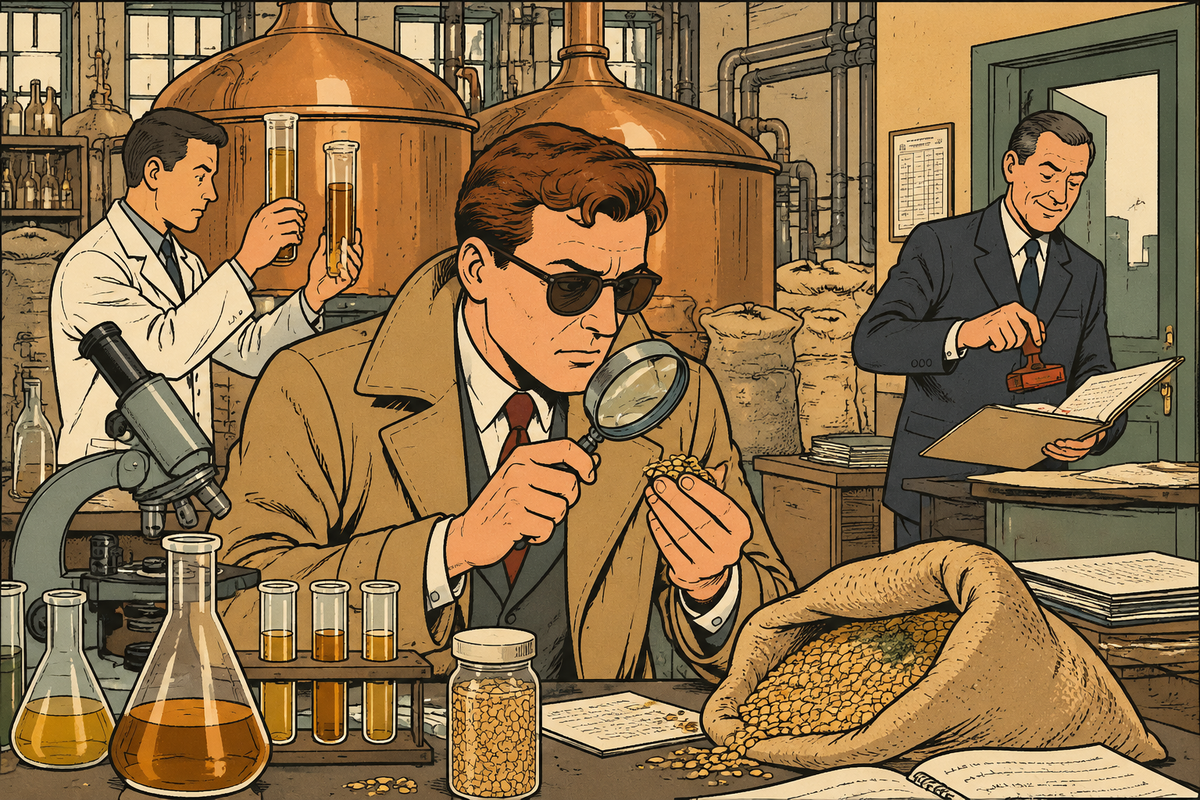
Yet while mycotoxin issues are, a priori, a matter of Russian roulette, there is a subtler danger that concerns 100% of beers…
No beer (belly) without yeast
Beer could never have become this iconic drink without the famous brewer’s yeast, or Saccharomyces Cerevisiae, closely related to Candida Albicans [13], a micro-fungus of ill repute if ever there was one (which we will come back to in our articles)…
Incidentally, this “sugar fungus of ale”, if we are to translate its name (Saccharo+myces+cerevisiae) is also recognised as an opportunistic pathogen…[14]
That is to say, officially, as an organism that causes problems in people who lack immunity.
As we will see with its cousin Candida, this term “opportunistic pathogen” does not quite mean “he’s a good lad, except when you lose your immunity”.
It means rather: “for now, it has only been seen to become harmful in poor wretches with compromised immunity”… A first sizeable nuance.
The second consideration is that if I live next to friendly neighbours who wait for my guard dog to leave before coming to rob me, I won’t feel all that confident…
Typically, here are a few cases of “opportunistic” infections:
- Yeasts present in the blood, or fungaemia[15]. That doesn’t smell too good, and indeed it often ends in intensive care. The authors consider that the risk is increased with “probiotics” of the Saccharomyces boulardii type (another “sugar fungus”, a cousin of our yeast, but authorised for a reason that escapes us).
- We have known, in fact, since 1980, that brewer’s yeast can cause septicaemia [16]. Once again, in individuals who are immunocompromised. Let us hope our understanding of yeasts improves…!
- This French study[17] examines 92 cases of infection with our brewer’s yeast. Surprisingly, the authors state that the infection factors for S. Cerevisiae are the same as those for an invasion by Candida Albicans, and that the two types of “invasive infections” are clinically identical… Curious.
- Finally (though without being exhaustive), auto-brewery syndrome, in which the gut is intoxicated by the alcohol produced by yeasts (Saccharomyces but also Candida).
But it seems that, as with Candida Albicans infections, the worst is not the visible infection such as septicaemia.
There is something less spectacular, and far more pernicious…
Fungi form the kingdom of chronic, invisible, surreptitious infections…
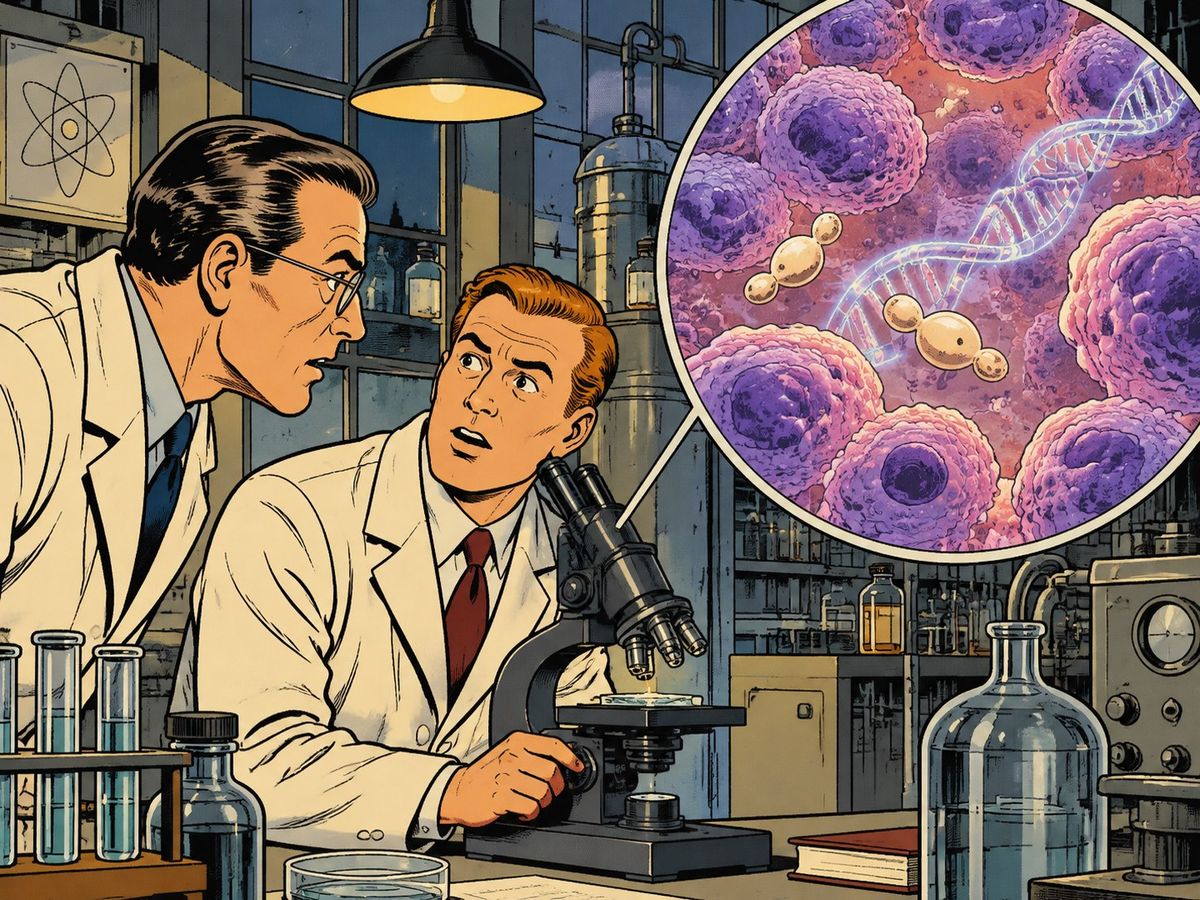
At the end of this investigation into yeast, there comes to me a question.
How can a product so ancient, so popular and widespread be so harmful to health?
Why did we allow the proliferation, all over the planet, of yeast, queen of alcoholic drinks, beer foremost among them?
I believe that here too, I have my hypothesis… But as the article is getting long, I will back it up in another post.
Conclusion and a ranking of poisons
Alcohol, with its obvious positive effects (an incredible icebreaker), reveals negative effects, often after the fact…
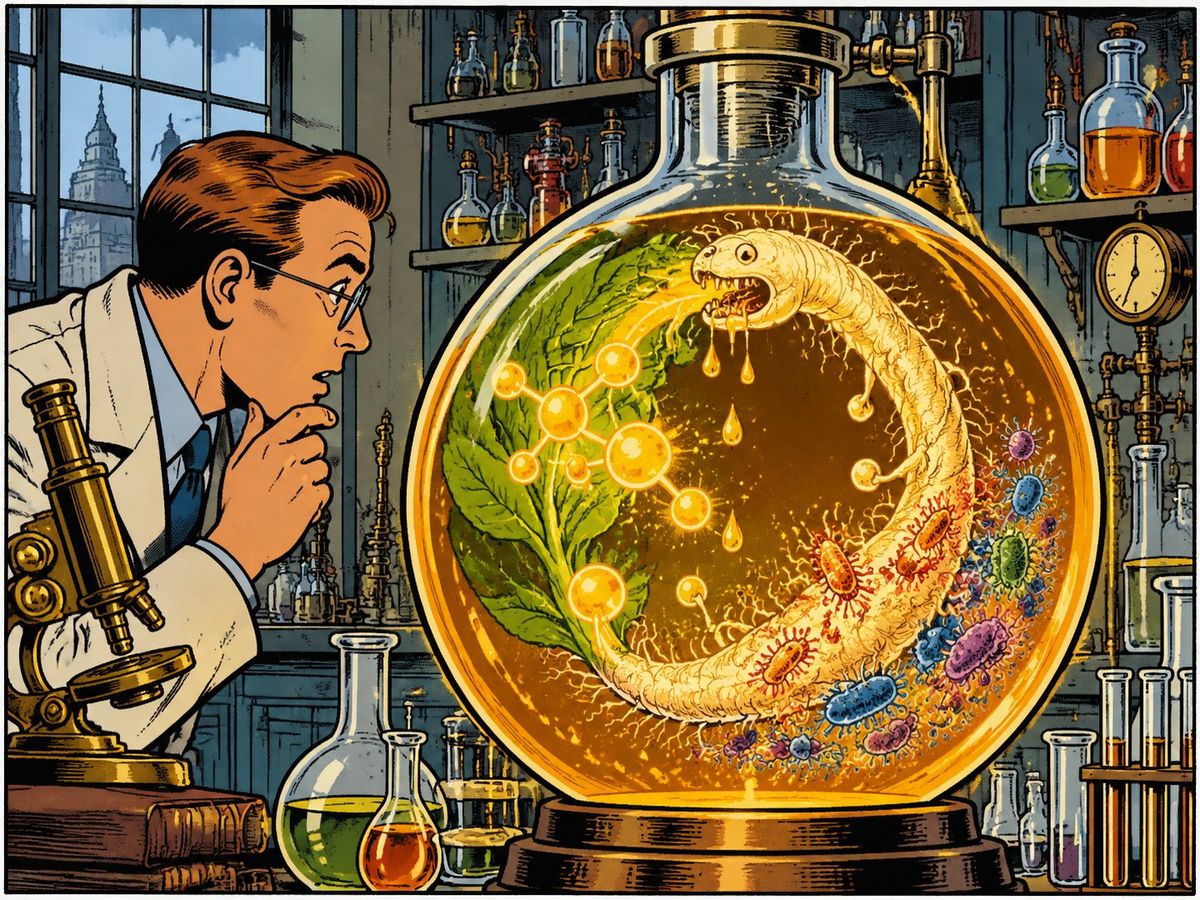
So, while alcohol is always a poison, the various drinks have their uses.
And if I had to venture any kind of ranking, here is the one I would propose:
- The best: the historical elixirs, relics of our forebears, with therapeutic aims: Bénédictine, Chartreuse, Centerbe… The ancient “panaceas”, such as theriac, were cast in the same mould.
- The descendants of the elixirs, less complex but effective: absinthe, génépi, gentian or verbena liqueur… Clacquesin, a pine-bud spirit, would fall into this category. “True gin”, distilled with juniper berries, can lay claim to certain therapeutic qualities; if it is a flavouring, then 6th place.
- The “replacements” for these descendants, especially once absinthe was banned: various pastis, bitters, vermouths…
- Cognac, armagnac and other noble spirits (including the Anglo-Saxon imitation known as whisky).
- Wine, probably less therapeutic than before, since it is now devoid of spices and laced with sulphites. But made from a noble fruit.
- Fruit brandies, calvados, perrys, rums… I would also put pommeaux and the like here.
- Cider: little alcohol, presence of polyphenols and above all of malic acid.
- Vodka and other grain distillates: problems linked to mycotoxins, to today’s cereal monoculture, to grain quality… And all that for what (apart from getting plastered, obviously…)?
- Beer, dead last, a threat to testosterone. The hop compounds seem unable to counterbalance the drawbacks. And above all, the yeast…!
Of course, the list should be adjusted according to the process (artisanal or not, macerate or flavouring…) and additives (sugar, sulphites, stabilisers). It’s just to give an idea.